Horror: A sanctuary for under represented voices.
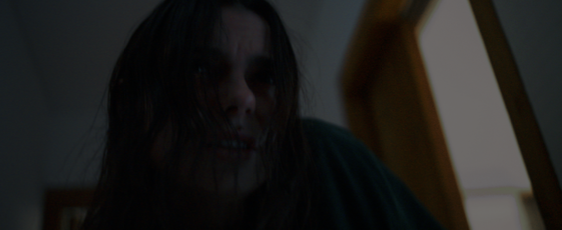
Horror hasn’t always been just about fear. Even when it wears the mask of monsters, ghosts, or supernatural dread, horror reflects the anxieties of the societies that create it.
At its best, it gives shape to what feels unsafe, unspoken, or unresolved.
For underrepresented communities, this makes horror more than entertainment. It makes it a storytelling sanctuary.
Because horror allows difficult truths to be explored without needing permission to speak them directly.
Experiences of displacement, prejudice, systemic pressure, or cultural erasure often exist in emotional or psychological spaces that are hard to articulate through traditional drama.
Through symbolism, communities can express realities that may otherwise feel too raw, too political, or too easily dismissed.
Of course, the ideal is that marginalized communities didn’t have to water down their experiences to make it more palatable but this is the nature of humans. Through fear we have a shared language between storyteller and audience. Horror creates a space for what mainstream storytelling has often positioned as ‘other’.
The outsider becomes the monster.
The haunted house becomes generational trauma.
The unseen threat becomes structural inequality.
The ticking curse becomes the failing body.
Through horror, we are able to look at the unfamiliar as a focal point.
In many modern horror narratives, the monster is not the marginalized person — but the forces surrounding them:
Cultural erasure
Social exclusion
Historical injustice
Collective silence
Horror gives creators permission to confront these forces without needing to present them in conventional terms. It asks audiences to feel before they fully understand.
There is a paradox in horror.
Through the supernatural, the surreal, or the grotesque, it exaggerates reality and creates an emotional distance.
And that distance can make difficult conversations safer.
Audiences may resist direct discussions of inequality or historical trauma. But they may willingly engage with a ghost story that mirrors those same dynamics.
It bypasses defensiveness and moves through empathy.
Unlike genres that often rely on universalized narratives, horror frequently draws from local mythology, folklore, and belief systems.
This makes it uniquely suited for underrepresented voices.
Stories rooted in specific traditions such as spiritual practices, ancestral histories, community fears, can retain their authenticity while still resonating globally.
A haunting tied to land. A curse rooted in history. A creature born from cultural memory.
These elements transform lived experience into narrative form.
Through this horror has become a vehicle for reclaiming narratives. It allows communities that have historically been portrayed as threats to rewrite the narrative AND to expose who or what the real danger is.
Horror can shift the gaze and stop the projection onto ‘other’ and reveal the structures that create fear in the first place.
For when underrepresented storytellers use horror, they are not simply trying to frighten.
They are:
Naming histories.
Exploring identity.
Processing collective memory.
Challenging dominant narratives.
Horror gives shape to what has been silenced. In doing so, horror has become not just a mirror of anxiety but a tool of resistance.